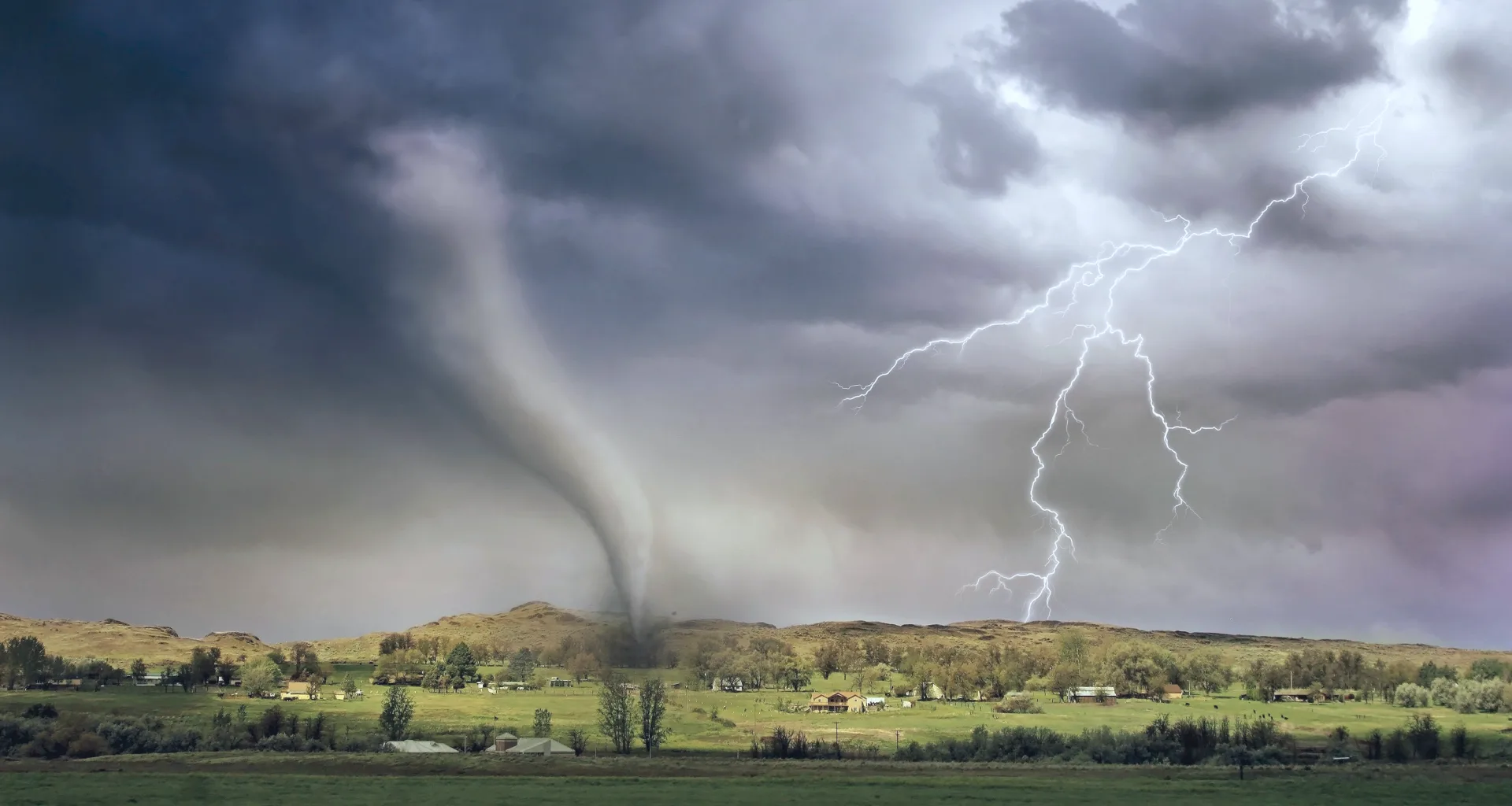
If it seems like practically every day, there’s another severe storm that’s on the news, you’re not imagining things. So far this year, there’ve been nearly double the amount of tornadoes than in normal years.
While there’s always a natural fluctuation on amount of tornadoes year to year, the warming of the planet is changing the weather patterns we all experience — climatologists have noted geographical shifts, as well as frequency and severity of cyclones.
What can you do to stay safe? Stay attuned to weather reports, as well as any critical warning signals that a tornado is on its way — learn what you can look out for with our blog on How to Stay Safe Driving in Tornado Alley.But once the twister is here, we’re sharing some key tips to keep in mind:
If you see a twister in its infancy or you’re at a great enough distance, you may even be able to get out of its path entirely.
Drive away from the funnel cloud, moving at a right angle from its warpath.
Either way, seek immediate shelter in any kind of sturdy building; often a basement or the lower floors (in a room without any windows) will be best.
Banks and restaurants also make ideal hiding spots because they’re likely to have fortified structures like vaults or freezers.
Don’t attempt to outrun a tornado, you’re not starring in the reboot of Twister. And the likelihood is that you’re not going to be able to outrun a cyclone heading straight toward you, no matter how hard you floor it. Even the least powerful F0 tornadoes have winds of 40 mph and F5 cyclones can be over 300 mph.
Don’t forget, a tornado isn’t obligated to follow any straight path; if it zigs when you think it’s going to zag, you could end up heading straight into its destructive path.
Many drivers may intuitively think of an overpass, tunnel, or bridge as a safe refuge — but these structures are not enclosed. Instead, they can act as a wind-surfing channel that speeds up the wind and heightens the danger.
Hiding under your car is a horrifically risky plan. Debris and other objects (including even an entire car) can be dropped onto your car, crushing you. The twister could also blow your car up and off you, further leaving you vulnerable to the elements.
It’s also common for people to try to find protection here. But a cyclone isn’t like when you run under trees for shade from the blazing summer sun. Tree branches are likely to snap in even semi-intense tornado winds, and entire trees are often uprooted, becoming deadly projectiles.
Always be hyper aware of any dangerous weather conditions in your area so that you can do your best to plan ahead… including avoiding commutes on wide open roads where shelter will be difficult to locate.
Yet another reason to avoid being inside your car. Glass can easily shatter and become razor sharp projectiles in the wind.
Emergencies can happen anytime, anywhere so you always want to have an emergency kit handy, both on the road and at work or home. PRO TIP: Wondering what else to have with you? We’ve got you covered with Your Car Emergency Kit, Explained.
Being in a vehicle will always be extremely risky in a tornado. Seek protective shelter if at all possible, but if it’s not and you’re caught out on the open road — stay calm in the emergency. Try to follow these tips, which should be the safest course of action:
Make sure any other passengers also are wearing their seatbelt and covering their heads as much as possible; the car windows and even windshield could get hit from incoming debris.
Use the same type of caution after any storm passes. Avoid downed power lines (which could be live), fallen trees, broken glass, nails, or other dangerous objects may be strewn across the ground.
As always, empowered drivers are safer drivers, more thoughtful drivers, and more engaged drivers. Check out more of our safety tips, including:
What are you waiting for? Join the ride and get a quote today and see how techno-driven coverage can lower your premiums.